
Starship goes orbital from Flight 14. The refueling test is the one that matters for the Moon
SpaceX says orbital flights start with Flight 14 and a ship-to-ship propellant transfer is targeted for 2026. Why lunar miners should care more than satellite customers.
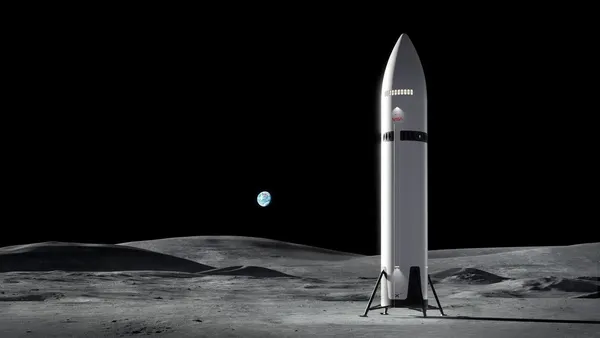
SpaceX said in a Sept. 15 update that Starship will begin flying orbital missions starting with Flight 14, carrying Starlink V3 satellites and running new tests “like the first orbital propellant transfer.” The same update says a long-duration flight and a ship-to-ship transfer demonstration are both targeted for 2026, with timing driven by how the V3 test flights go. As of today, Oct. 18, there are ten weeks left in that year.
The most recent flight, Flight 13 on July 24, was the second V3 flight. Its ship stage completed a full ascent burn and deployed all 20 Starlink V3 satellites on a suborbital path. The booster finished most of its boostback but came down in a hard splashdown after only some engines relit for landing. That’s a decent flight for a new vehicle generation. It doesn’t touch refueling.
The refueling plan has two steps. First a Starship stays in orbit for an extended period to measure boil-off and long-duration propellant storage. Then a second ship launches, rendezvous using DragonEye sensors carried over from Dragon, docks, and transfers propellant. SpaceX says V3 ships have docking ports and a reworked propellant connection for exactly this, and that it has been flying radio-frequency propellant gauges on recent flights.
Why this is our story and not just a launch story: the 100 tons to the lunar surface that every Moon Base and mining plan quietly assumes only exists if refilling works at scale. Small transfers have been done before. Space Daily notes that nobody has moved hundreds of tonnes of cryogenic methane and oxygen between two giant docked vehicles. Without that, a lunar Starship is a very large rocket that can’t get anywhere useful.
There’s a second-order point. Boil-off data from the long-duration flight is exactly what a future lunar propellant business needs too, since storing cryogens near a lunar base faces the same physics. The test SpaceX runs for itself is a free market study for everyone selling lunar oxygen.
Our read: a transfer test before Jan. 1 would be impressive, and we wouldn’t be surprised to see it slip into 2027. What would change our mind about lunar timelines is the transferred mass. A token few tonnes is a demo. Tens of tonnes moved cleanly would pull every Moon Base schedule forward.
Mars Mining Co. is an independent news site. It is not affiliated with NASA, JAXA, ESA, SpaceX or any company mentioned. Nothing here is investment advice. Full disclaimer.