
Who's actually doing space resources in 2026
A working map of the companies and agencies with hardware, contracts or customers. If it's only a rendering, it isn't on the list.
Our rule for this list is simple: an entry needs flight hardware, a signed contract or a paying customer. Plenty of space mining companies have none of those. They aren’t here.
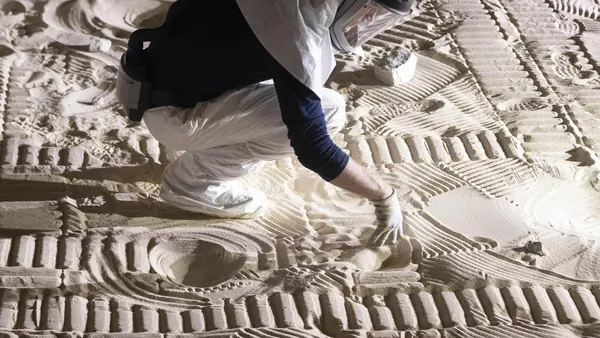
Interlune (Seattle) is the closest thing the field has to a commercial resource company with revenue lined up. It has helium-3 purchase agreements with the U.S. Department of Energy Isotope Program, Bluefors and Maybell Quantum, which we break down in our helium-3 reality check. Its Prospect Moon payload, backed by a $6.9 million NASA contract, will scoop, heat, mill and sort regolith and measure the gases released. Its press page also lists an expanded partnership with Vermeer, the heavy-equipment maker, and a collaboration with rover company Astrolab. That pairing of a space startup with an Earth digging company is the most mining-like thing in the sector.
AstroForge is the asteroid metals bet. Its Odin probe was lost in 2025, it was candid about why, and its latest pitch is Solo, an autonomy platform for deep-space spacecraft that pairs specialized models with rules-based command limits. We read the pivot toward autonomy as a hedge: software it can sell before any asteroid pays.
NASA is the anchor customer for everything lunar. The Moon Base program’s rover update puts resource prospecting on the task list, and the agency’s contracts are how most companies on this list pay their engineers.
ESA is funding the questions instead of the hardware, for now. It built the PROSPECT drill-and-lab package and this month hired a consortium led by Poland’s MIRORES with Luxembourg’s Spaider Space to model whether lunar resources can make money.
China has the most ambitious single resource mission on the books. Chang’e-7, built to hunt for ice in shadowed craters near the south pole with an orbiter, lander, rover and a hopping probe, was postponed to 2027 on the eve of its August launch.
JAXA is the Phobos wildcard. Its MMX sample return is on its way, and as we wrote at launch, Phobos samples bear on whether Mars’s moons are useful staging depots.
The pattern: almost every dollar here is either a government contract or an offtake agreement from a buyer that needs a scarce isotope. Nobody is yet buying lunar water or oxygen commercially. We expect that list to look very different in two years, and we’ll update this page as it does.
What would change our mind about the pattern: a commercial lander company signing a binding contract to buy lunar-produced propellant.
- Interlune: Press releases
- Interlune: A guided tour of our Prospect Moon mission (Oct 13, 2026)
- AstroForge: The physical AI revolution will start in space (Oct 7, 2026)
- Industry Alarm: MIRORES wins ESA lunar resources contract (Oct 15, 2026)
- ESA: PROSPECT
- NASA: Progress update on Moon Base rovers
- Scientific American: China delays Chang'e 7 moon mission until 2027
- SpaceNews: JAXA's MMX en route to Phobos (via SpacePolicyOnline)
Not affiliated with NASA, SpaceX or any agency or company mentioned. Not investment advice. Disclaimer.